Early Detection of Coupling
Misalignment Using Online
Vibration Monitoring
Background
A large starch manufacturing facility operating continuous processing equipment deployed the ARGUS online vibration monitoring system on critical rotating machinery to improve reliability and detect developing mechanical faults. The plant operates multiple motors, gearboxes, and driven machines where unplanned failures can cause significant production disruption.
ARGUS sensors continuously measure tri‑axial vibration and temperature and perform spectral analysis to detect emerging mechanical faults in rotating equipment.
Monitoring Configuration
An ARGUS vibration sensor was installed on the drivetrain housing of the monitored machine.
The system continuously records:
- Tri‑axial vibration
- Time waveform (TWF)
- FFT spectrum
- Temperature
Alerts are generated when vibration behaviour deviates from normal operating conditions or when abnormal spectral patterns appear.
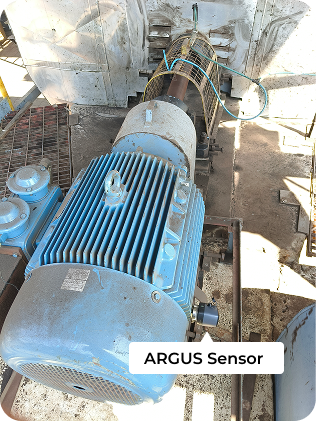
Figure 1 shows the monitored machine with the ARGUS vibration sensor installed.
Observations
During routine monitoring, an abnormal vibration signature was detected.
Key indicators included:
- Increasing vibration amplitude trend
- Spectral components consistent with shaft misalignment
- Waveform distortion indicating drivetrain mechanical stress
Spectral analysis suggested a coupling‑related issue between the motor and driven equipment.
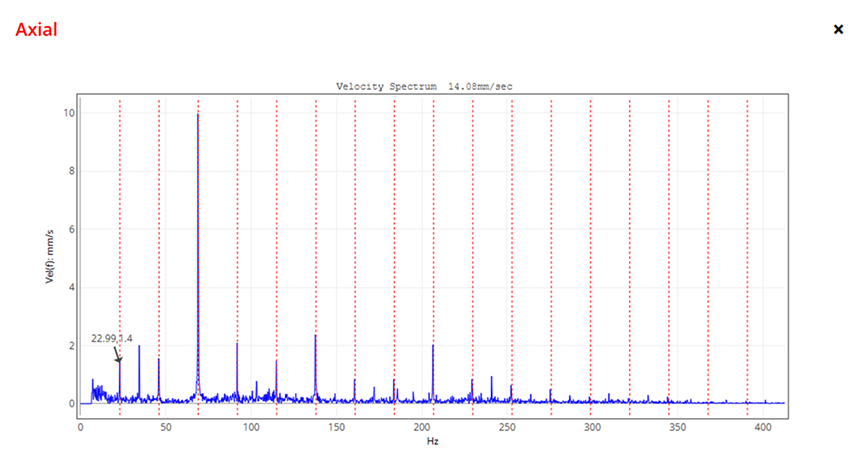
Figure 2 — shows the time waveform recorded during the abnormal condition
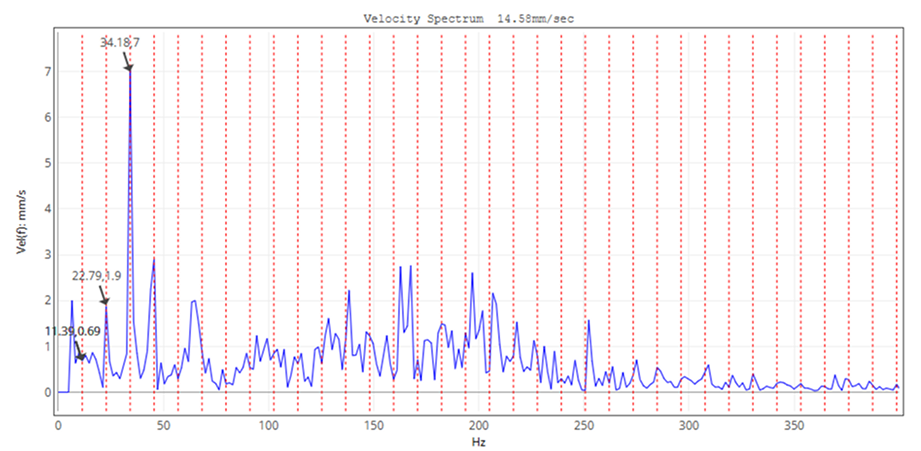
Figure 3 —shows the corresponding FFT spectrum highlighting the dominant vibration components.
The vibration signature was consistent with angular coupling misalignment in the drive train.
Diagnosis
Coupling misalignment introduces cyclic forces in the drivetrain and commonly produces elevated vibration at running speed and harmonics.
If not corrected, this condition can lead to:
- Accelerated bearing wear
- Coupling damage
- Shaft fatigue
- Gearbox stress
Trend analysis indicated the fault was progressing but had not yet reached a failure stage.
Maintenance Action
Based on the vibration analysis, the maintenance team scheduled an inspection. The inspection confirmed misalignment between the motor and gearbox coupling.
Corrective actions included:
- Motor–gearbox coupling realignment.
- Verification of shaft alignment tolerances.
- Post‑maintenance vibration verification.
After realignment, vibration levels returned to normal operating limits.
Outcome
Early fault detection allowed the issue to be corrected during a planned maintenance window, avoiding equipment damage and production downtime.
Estimated maintenance cost avoided: ₹7 – ₹15 lakh
Estimated production loss avoided (≈2 days downtime): ₹13 – ₹26 lakh