Early Detection of Blower
Instability Using Condition
Monitoring
How vibration analysis enabled early detection of developing instability in a 1400 kW industrial blower, helping prevent potential equipment failure and production disruption.
The Problem
A multistage centrifugal blower operating in a paper manufacturing facility showed a gradual increase in vibration levels during routine condition monitoring.
Although the overall vibration levels had not yet reached alarm thresholds, the vibration trend indicated a developing condition requiring detailed analysis. Because the blower plays a critical role in supporting plant operations, any failure could lead to significant production disruption and costly downtime.
To investigate the issue further, engineers performed vibration measurements using the ARGUS portable vibration monitoring system.
Asset and Monitoring Context
The monitored equipment was a multistage centrifugal blower used in a continuous industrial process.
Key operating parameters:
- Rated power: 1400 kW.
- Operating speed: 5493 RPM.
- Running frequency: 91.55 Hz.
The machine operates with journal bearings and is connected to a gearbox. Due to the high power rating and continuous operation of the equipment, early detection of abnormal vibration conditions is essential for maintaining reliability.
During inspection, vibration measurements were collected at the blower bearing housings using the ARGUS portable vibration monitoring system.
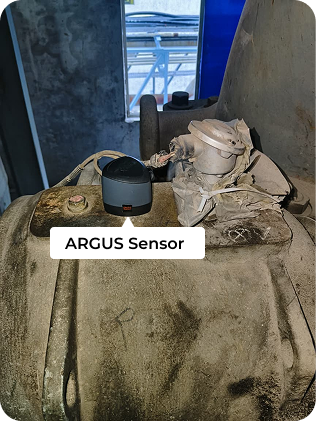
Figure 1 — ARGUS vibration sensor deployed on blower bearing housing
Vibration Analysis
Spectral analysis of the vibration signals revealed two distinct patterns:
- Sub-synchronous vibration associated with rotor instability
- Strong running-speed vibration with harmonic components
These spectral characteristics suggested the presence of both rotor dynamic instability and mechanical looseness.
Sub-Synchronous Instability
The vibration spectrum revealed a prominent sub-synchronous vibration component at approximately: 0.38 × running speed
Running frequency: 91.55 Hz
Observed sub-synchronous component: ≈ 34.8 Hz
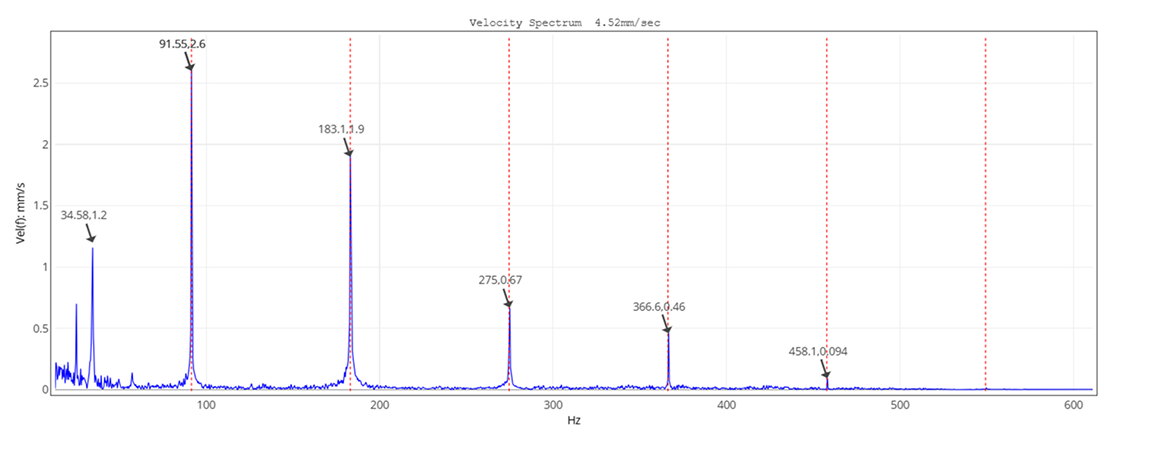
Figure 2 — Velocity spectrum showing subsynchronous vibration component
Oil whirl occurs when the hydrodynamic oil film within a journal bearing begins to drive the rotor at a frequency lower than the shaft rotational speed. If left uncorrected, this instability can lead to increasing vibration levels and progressive bearing damage.
Mechanical Looseness
In addition to the sub-synchronous vibration component, the spectrum also revealed strong vibration at the shaft rotational frequency.
Key observations included:
- Dominant vibration peak at 1× running speed (91 Hz)
- Presence of harmonic components of running speed
These spectral characteristics are commonly associated with mechanical or structural looseness in rotating machinery.
Possible sources include:
- Bearing pedestal looseness
- Structural looseness in the machine foundation
- Coupling or rotor support looseness
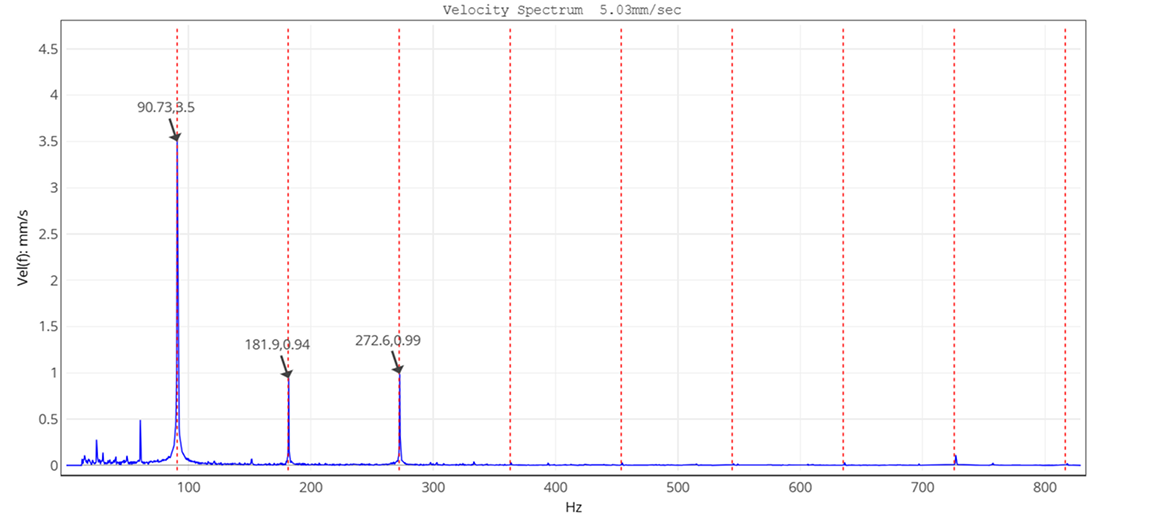
Figure 3 — Velocity spectrum showing dominant running-speed vibration
Root Cause Interpretation
The vibration analysis indicated the presence of two interacting conditions:
- Rotor instability associated with oil whirl behaviour in the journal bearing system
- Mechanical looseness in the rotor support structure
These conditions can reinforce each other and lead to increasing vibration amplitudes, accelerated bearing wear, and potential rotor damage if not addressed early.
Potential Maintenance and Production Impact
Failure of a high-power blower can lead to substantial maintenance costs and production losses.
Typical repair activities may include:
- Bearing replacement
- Shaft inspection and repair
- Machine dismantling and realignment
- Lubrication system servicing
Estimated breakdown maintenance cost: ₹20 – ₹40 lakh
Typical repair duration: 3 – 5 days
Estimated production loss during shutdown: ₹2 – ₹3 crore
Results
- Early detection of rotor instability and mechanical looseness
- Prevention of severe equipment damage
- Ability to plan maintenance rather than perform emergency repairs
- Avoidance of potential production disruption
Conclusion
This case study demonstrates the importance of vibration monitoring and predictive maintenance in industrial rotating equipment. The ARGUS vibration monitoring system enabled engineers to detect developing instability in a large multistage blower before catastrophic failure occurred.